

The Question That Comes Before the Bins
Most people expect an organizer to walk in and start pulling things off shelves. The real work starts somewhere quieter, with a conversation.
What do you reach for every single morning? And what always seems to go missing?
Those two questions can reshape an entire room. They turn organizing from a matter of taste into a plan built around one specific person, and that’s the difference between a space that looks good for a week and one that keeps working for years.
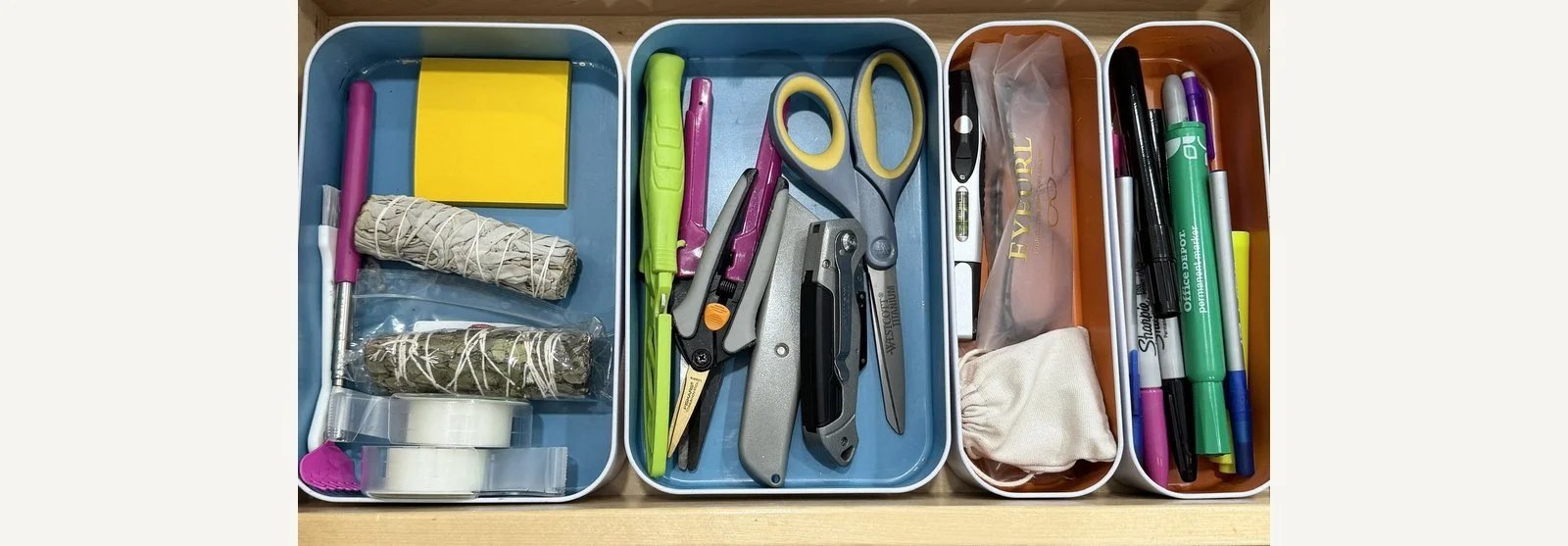
Everything but the keys.
The Best Organizing Tool Isn’t a Bin
Walk into any home store, and you’ll find aisles of beautiful containers, each one promising order. They can help, and they’re often part of the finished picture. But a bin has no idea how you live. It can’t tell you that your keys belong by the garage door rather than the front door, or that the blender you use daily is buried behind a pasta maker you’ve used twice.
Only questions can do that. Ask them first and keep asking throughout, and the containers become the easy part.
The Questions That Shape Every Space
Every home is different, so the questions shift from client to client. A few come up in nearly every space, and each one reveals something specific.
What do you reach for every morning? This reveals the front row. The things used daily deserve the most reachable spots, at eye level and close to where they’re used.
What always seems to go missing? This usually points to an item without a home. Things wander when there’s nowhere obvious for them to land.
What frustrates you most about this space? The answer shows where the friction lives, whether it’s a drawer that jams or a closet door that blocks the light switch.
How do you want it to feel when you walk in? This one sets the goal, and it’s often the most revealing answer. Some people want calm. Others simply want to get out the door on time.
Together, the answers turn a pile of belongings into a clear plan. They can even reach beyond the shelves. A reading chair might move closer to the window, or a dresser might shift so its drawers finally open all the way.
Working With the Space You Have
Every space has its limits. A closet is a certain size, and wishing it bigger won’t move the walls. Sometimes the best plan works with a space exactly as it is. Other times it means rethinking how it’s set up, whether that’s new shelving or moving a piece of furniture.
Either way, the questions decide what earns the prime real estate. Sometimes that means letting a few things go. Just as often, very little leaves the house, and the transformation comes from moving everyday things forward and giving the rest a home a little farther back.
Why Things Go Missing in the First Place
Findability matters more than most people realize. A 2023 Shane Co. survey of more than 2,000 Americans found that people misplace about five items a month and spend roughly 16 minutes tracking down each one. Over a year, that adds up to nearly 17 hours of searching.
The most telling detail? About one in five people said lost items usually turn up right where they should have been all along. Often the problem isn’t memory at all. The item never had one clear, obvious home, so it lands wherever your hands happen to be.
There’s a quieter cost, too. Research has linked cluttered homes to higher everyday stress, and anyone who has torn through a kitchen looking for keys while running late knows exactly how that feels.
A System That Still Works Months Later
A freshly organized space photographs beautifully. The real test comes months later, on an ordinary busy week.
Recently, a client’s apartment, several months after the work was finished, looked just as it did on the final day. Everything still had a home, so it was clear where things went and where to find them. No guessing, no hunting, and they shared that it’s easy to keep that way.
That’s why the questions matter so much. A system built around how someone actually lives doesn’t depend on willpower to survive. It simply makes the right choice the easy one.
Try It in Your Own Home
You can borrow this approach this week with a single cabinet or drawer.
Start by taking everything out. As each item goes back, ask whether you use it every week or less often. Weekly items go in front, at the easiest reach. Everything else moves up high or farther back. If something hasn’t been used or missed in ages, it may be ready to go.
Then give it a week. If something keeps landing somewhere else, pay attention. That spot is telling you where its home should be.
Working With a Professional Organizer in Boca Raton
Some people love working through these questions on their own. Others would rather have someone ask them, listen closely, and build the whole space around the answers, especially when life is full or a move is in the mix.
That conversation is where every project with The Concierge Organizer begins, and it continues throughout the work. For clients across Boca Raton and South Florida, the result is a home where the important things sit up front and everything is easy to find, long after the work is done.
Frequently Asked Questions
How does a professional organizer decide where things go?
By asking how you actually live. What you use daily, what goes missing, and what frustrates you help determine where everything belongs, so the most important things are easiest to reach.
Do I need to declutter before getting organized?
Not necessarily. Sometimes editing is a big part of the work, and sometimes very little leaves. Often the belongings are fine and simply need better homes.
What if my closet or pantry is small?
The footprint may be fixed, but there’s usually more possible than it seems. Putting everyday items up front helps, and rethinking the setup can make the same space hold more.
How much time do people spend looking for lost things?
A 2023 survey of more than 2,000 Americans put it at nearly 17 hours a year, with about five items misplaced every month.
What happens during a consultation?
A relaxed conversation about your space and how you live in it, what’s working and what isn’t. From there, a simple plan takes shape around your life and your pace.
Do you serve Boca Raton and nearby areas?
Yes. The Concierge Organizer works with clients across Boca Raton and the surrounding South Florida communities, including busy families and anyone navigating a move or downsizing.
professional organizer Boca Raton • how to organize your home • home organizing tips • South Florida home organizer • home organization systems • Amy Skoke • The Concierge Organizer
